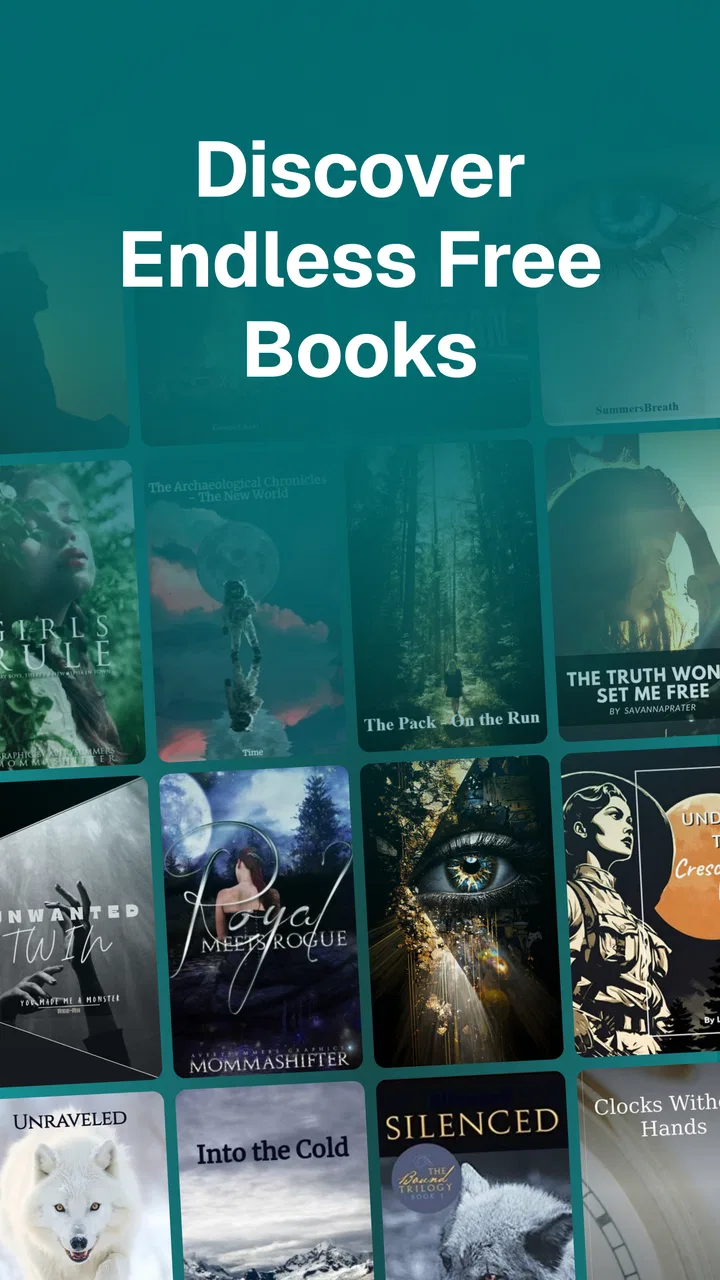
Inkitt: Books, Novels, Stories
- 4.5
- Rating
- 5.00M
- Installs
- Free
- Price

 Analysis by App-foxy
I picked up Inkitt: Books, Novels, Stories when I wanted something more flexible than rereading books I already owned. My usual problem is simple: I have a few spare minutes, but not enough time to choose a full novel, visit a bookstore, or commit to a paid ebook. Inkitt approaches that situation as a reading app built around a large community of fiction writers and readers. It is free, aimed at a Teen audience, and belongs in the Books & Reference category, although its strongest identity is clearly as a discovery platform for online fiction.
After spending time moving between browsing, reading, and writer-focused material, I came away with a mixed but favorable impression. The app is at its best when I treat it like a constantly changing shelf of serialized stories rather than a polished replacement for every major ebook service. There are plenty of reasons to try it, especially if you enjoy romance, fiction, or more mature storytelling. At the same time, the open-ended nature of its catalog means that finding a story I truly want can take patience.
From an empty reading list to a story worth following
I start with a simple question: what would make a new story worth keeping on my reading list? In this section, I look at how Inkitt turns a vague mood into a choice, and why a few minutes spent testing an opening can be more useful than scrolling through titles indefinitely. That discovery habit also sets up a closer look at what happens when reading becomes a heavier part of the day.
You May Also Like

 Blood Strike: 2.5 Anniversary
Blood Strike’s Loadouts Turn Every Drop Into a Tactical Gamble
A close look at Blood Strike’s custom loadouts: how fast access to signature weapons reshapes its battle royale rhythm, rewards preparation, and narrows the gap between fights.

 Pandora - Music & Podcasts
Pandora’s Music Is Easy to Start, but Harder to Recover
Pandora’s strength is its low-effort path from a seed to a station. Its weak spot is how much confidence it asks you to place in connection, setup, and quiet recovery.

 8 Ball Pool
 Is Built on Rivalries, Rematches, and Routine
A close look at the rivalries, rematches, shared routines, and unanswered safety questions that turn a quick pool match into a persistent mobile community.

 Samsung Music
’s Quiet Strength Is Playing What You Already Own
Its reach comes less from spectacle than from dependable access to a personal library. That simplicity is both the app’s strongest retention engine and its ceiling.

 AccuWeather: Weather Radar
AccuWeather Review: A Quick, Clear Forecast for Everyday Decisions
For everyday plans, the best forecast is the one you can understand quickly. AccuWeather makes rain timing, radar, and local conditions easy to act on, with a few trade-offs.

 Hill Climb Racing
Why Hill Climb Racing Still Turns Crashes Into One More Run
A tiny car, a bumpy hill and one more upgrade: Hill Climb Racing keeps resurfacing because its simple chaos makes every near-miss feel personal.
More From Our News Desk



The starting point: wanting variety without another purchase
The first useful question is not whether Inkitt has books. It does. The more important question is whether its style of discovery matches the way you read. If you want a carefully edited bestseller, a specific academic reference, or a dependable catalog of established authors, a conventional ebook store or library app may be a better starting point. Those services are usually organized around known titles and publishing information.
Inkitt makes more sense when I begin with an open request: give me something engaging, let me explore unfamiliar writers, and do not make me pay before I know whether the story suits me. Its focus on romance, fiction, and erotica gives the catalog a clear personality. That focus is useful because I am not searching through every possible kind of book, but it also means readers looking mainly for history, technical manuals, news, or children’s literature may feel out of place.
The app has grown into a sizeable reading community. It carries an average rating of 4.4 from around 94 thousand ratings, and it has passed 5 million installs. Those figures suggest that it is not a tiny experiment or a private writing forum. Still, popularity should not be confused with uniform quality. A large community can produce pleasant surprises, but it can also make the catalog feel uneven from one title to the next.
My first pass through the catalog
I found the most practical way to begin was to browse with a narrow mood in mind. Instead of asking myself to inspect everything, I would decide whether I wanted a slow romance, dramatic fiction, or something more intense, then judge the available descriptions and opening pages against that mood. This simple habit saves time because the sheer number of possibilities can otherwise turn reading into endless scrolling.
The opening of a story matters more here than it does in a traditional bookstore. With a printed novel, I may already trust the publisher, author, or recommendation source. On Inkitt, the first chapters are often my real test. I look for a clear premise, readable formatting, and a voice that feels consistent. If those basics are missing, I move on quickly rather than hoping the story will become enjoyable later.
That is one of the app’s most interesting trade-offs: discovery feels personal, but it also asks me to do more editorial work. I am not simply selecting from a shelf where every title has passed through the same process. I am acting partly as a reader and partly as a filter. For some people, that feels exciting. For others, it can be tiring.
A practical reading routine for short sessions
Inkitt fits naturally into small gaps in the day. I can open it while waiting for an appointment, read a few pages during a commute, or return to a story before bed. The useful workflow is to keep the app for discovery and continuation, rather than trying to make every session productive. I browse only until I find one or two promising stories, then switch from searching to reading.
That distinction prevents a common problem with content-heavy apps: spending the entire available break looking for something and never actually reading. Once I find a story with a strong opening, I stay with it for several sessions before judging the whole platform. A single weak title does not say much about the catalog, just as one excellent opening does not guarantee a satisfying ending.
For readers who prefer long, uninterrupted books, the experience may require more adjustment. Online fiction can feel different from a finished paperback, especially when the story develops gradually or follows a release pattern. I would recommend Inkitt to someone comfortable with exploring and returning, not to someone who wants every reading decision made in advance.
How the reading flow works in practice
My normal path is straightforward: open the app, browse a genre or mood, inspect a title, read enough of the beginning to test the writing, and decide whether it deserves more time. When a story works, I return to it instead of continuing to sample indefinitely. This creates a personal queue without requiring me to buy several books just to discover that they are not for me.
The important handoff happens between the app’s recommendations and my own judgment. A title may look appealing because its premise matches what I want, but the actual writing determines whether I continue. I pay attention to pacing, character motivation, and whether the chapter ending gives me a reason to come back. Those checks are especially useful in romance and serialized fiction, where a dramatic premise can sometimes be stronger than the execution.
I also treat the Teen content rating as a reminder to choose carefully. The catalog includes erotica alongside other fiction, so the app is not something I would hand to a younger reader without supervision. Adults should also remember that a general age label does not tell me whether every individual story will match my personal comfort level. I check the description and opening before settling in, particularly when reading in a shared space.
When the reader becomes part of the writing ecosystem
Inkitt is not only aimed at people who consume stories. Its store summary also speaks to writers, and that changes the way I see the platform. A reader can encounter an unfamiliar author before that author has the visibility associated with a traditional publishing route. In turn, a writer can place work in front of an audience that is already browsing fiction.
This creates a useful handoff between discovery and participation. I might arrive looking for a romance, find a writer whose style interests me, and then explore more of that writer’s work. A writer can think about the same journey in reverse: present a story, attract readers through its premise and opening, and use the platform as a place to build an audience. I would not describe this as a substitute for every professional publishing process, but it is a meaningful part of the app’s appeal.
The benefit is immediacy. The drawback is that the reader may encounter works at different stages of polish. If I expect every story to have the same editing standard, I may become frustrated. If I approach the app as a place to discover developing voices, I am more likely to enjoy the variety. That mindset is not an excuse for poor writing; it is simply a more accurate expectation.
A realistic everyday scenario
Imagine that I have a long train ride and want a romantic story, but I do not know which author to choose. I open Inkitt, browse until a premise catches my attention, and read the beginning rather than relying only on the title. The first story has an interesting setup but flat dialogue, so I leave it. The next one takes longer to establish its characters, yet the voice feels more natural, so I continue.
By the time the journey ends, I have not necessarily finished a book, but I have found a story I want to revisit. That is a successful outcome for this app: it turns an uncertain reading need into a personal discovery. The result is less predictable than downloading a well-known bestseller, but it can feel more rewarding when I connect with a writer I would not have encountered elsewhere.
The same scenario also shows the friction. If I am exhausted, impatient, or working with a very specific request, I may not want to test several openings. On those days, a library app with a curated collection or an ebook store with familiar authors is more efficient. Inkitt rewards curiosity more than urgency.
What changes for writers
For a writer, the workflow begins with a different starting condition. Instead of asking what to read, I would ask whether I want to share fiction with an active reading audience. The app’s writer-oriented positioning makes it relevant to people who want their work to be discovered in the same environment where readers browse.
The handoff here is from manuscript to audience. A writer needs a premise that can attract attention, an opening that earns the next chapter, and enough consistency to keep readers engaged. The platform may make that connection easier than publishing a file that nobody knows exists, but it does not remove the hard part: writing a story that people genuinely want to continue.
I would advise writers to use the app with realistic expectations. It can be a place to test whether a concept draws interest and to meet readers who enjoy the relevant genres. It should not be treated as proof that every draft is ready for professional publication. Before sharing, I would revise carefully, check chapter structure, and read the opening on a phone because mobile presentation affects how quickly a reader decides to stay.
Where Inkitt is stronger than usual alternatives
Compared with a standard ebook retailer, Inkitt feels less transactional. I am not mainly choosing between products with fixed prices; I am exploring a community of stories. That makes it particularly appealing when I want free fiction and am willing to spend time finding an author. A retailer is usually better when I know the exact title, want a major release, or need a predictable reading experience.
Compared with a library app, Inkitt offers a different kind of access. A library service is often excellent for established books, borrowing rules, and organized collections. Inkitt is more adventurous, especially for readers who enjoy romance and emerging voices. The trade-off is that the library experience may feel more curated, while Inkitt asks me to judge stories individually.
Compared with a dedicated writing community, Inkitt’s reading identity is more prominent. I can come in simply to read rather than participate in workshops or critique exchanges. That is convenient for casual readers, but writers seeking detailed editorial discussion may prefer a platform designed specifically around feedback and craft conversations.
Small habits that improve the experience
My first tip is to judge a story in stages. The description tells me whether the premise is relevant, the opening tells me whether the writing works for me, and several chapters reveal whether the pacing can hold my attention. Stopping at the first sign of a mismatch is sensible, but abandoning a promising story after only a paragraph can be too quick.
My second tip is to separate browsing time from reading time. I set a personal limit for discovery, choose a title, and then stop searching. This makes the app feel like a reading tool instead of an infinite feed. It is a small change, but it turns the catalog’s size from a distraction into an advantage.
My third tip is to use the Teen rating as a starting point for personal screening, not as a complete guide to tone. Since the catalog includes romance and erotica, I check the story’s subject matter before opening it in public or recommending it to someone else. That is especially important when a phone or tablet is shared with family.
For writers, my practical tip is to read as a user before publishing as an author. I would study how quickly a story communicates its premise, whether chapters are comfortable to read on a small screen, and what makes me continue after the opening. Those observations are more useful than simply uploading a manuscript and waiting for attention.
Technical expectations and the current version
Inkitt was released on January 7, 2017, and the current version is 4.1.19. It supports devices running Android 7.0 or later. That makes the minimum system requirement fairly approachable for people using older Android phones, although the actual comfort of reading will still depend on the device’s screen, battery condition, and general performance.
I would not choose the app for a device that is already struggling with storage or multitasking, simply because a large reading catalog becomes less pleasant when browsing feels slow. On a comfortable phone, the main concern is not demanding graphics but whether the reading flow remains easy enough that I forget about the interface. The app’s value is in getting me from a story search to sustained reading with as little interruption as possible.
Because it is free, the financial barrier is low. That does not mean the time cost is zero. The real investment is attention: exploring titles, rejecting weak openings, and deciding which writers deserve a longer chance. For me, that is a fair exchange when I am in the mood for discovery, but it is not always the quickest route to a specific book.
Where the flow breaks down
The biggest break occurs when I want certainty. If I need a particular author, an authoritative reference, or a book with a consistently professional editorial finish, Inkitt is not my first choice. Its community-driven character is also its limitation. The variety that produces unexpected favorites can make the search feel inconsistent.
Another weak point is reader patience. Someone who dislikes sampling, unfinished-feeling narratives, or uneven pacing may find the experience more work than pleasure. I would also skip it if I wanted a distraction-free environment built around books I already own, because the discovery side can tempt me away from the title I originally intended to read.
Writers should be equally aware of the break in the workflow. Reaching readers is not the same as building a lasting audience, and publication in a reading app does not guarantee meaningful attention. Success still depends on the story, presentation, and the reader’s willingness to continue. The platform can open a door, but it cannot carry the manuscript through it.
My result after using it as a reader and discovery tool
My final view is that Inkitt works best as a free fiction-discovery app with a strong romance and writer-community angle. I like the way it lowers the risk of trying an unfamiliar story, and I appreciate that I can approach it either as a reader looking for something new or as a writer thinking about audience reach. The experience is more personal and unpredictable than a conventional digital bookstore.
I would recommend it to readers who enjoy exploring new authors, especially in romance, fiction, and erotica, and who do not mind deciding for themselves which stories are worth continuing. I would also recommend it to aspiring writers who want to understand how their work might meet mobile readers. The app has earned a substantial audience, with around 5.8 thousand written reviews in addition to its broader rating activity, but my recommendation rests more on the workflow than on popularity alone.
I would skip it when my priority is a highly curated catalog, a known bestseller, scholarly material, or a guaranteed polished reading experience. For everyone else, the best approach is simple: enter with a mood, test the opening, protect your reading time from endless browsing, and give promising writers a fair but honest chance. Used that way, Inkitt is not merely a place to pass time; it is a practical route from an empty reading list to a story I may genuinely want to finish.
FAQs for Inkitt: Books, Novels, Stories
01What types of stories can I find on Inkitt?
Inkitt offers a diverse range of genres, including romance, fantasy, sci-fi, thriller, and mystery. The platform is designed to cater to various reading preferences, ensuring there's something for everyone. Users can discover new authors and enjoy a wide selection of both popular and emerging stories.
02Is Inkitt free to use?
Yes, Inkitt is free to download and use. Readers can access thousands of novels and stories without any cost. However, there might be premium features or content available for purchase within the app. It's a great way to explore new literature without a financial commitment.
03Can I read offline on Inkitt?
Inkitt allows users to download stories for offline reading. This feature is particularly useful for those who want to enjoy their favorite books without requiring a constant internet connection, making it convenient for travel or areas with limited connectivity.
04How does Inkitt support authors?
Inkitt provides a platform for writers to publish their work and reach a global audience. It offers tools for feedback and analytics, helping authors improve and grow. Successful stories may even be considered for publishing deals, giving writers a chance to gain recognition and professional opportunities.
05Is there a community aspect to Inkitt?
Yes, Inkitt fosters a vibrant community where readers and writers can interact. Users can leave reviews, rate stories, and discuss their favorite books with others. This interaction enhances the reading experience and allows for meaningful connections within the literary community.
Pros
- Vast library of genres and stories.
- Offline reading mode available.
- User-friendly interface design.
- Regular updates with new titles.
- Interactive community for feedback.
Cons
- Limited customization options.
- Ads in the free version.
- Occasional app crashes reported.
- No audiobook option available.
- Some content is locked behind a paywall.

Inkitt: Books, Novels, Stories
Gallery